Introduction
Kalinga architecture is one of the most notable styles of Indian temple architecture, which is known for its grandeur, intricate carvings and spiritual symbolism. This architectural style developed in the ancient Kalinga region, which roughly corresponds to the modern state of Odisha and parts of Andhra Pradesh and Chhattisgarh.
What makes Kalinga architecture special is its wonderful blend of beauty, engineering skill and religious devotion. The temples built in this style are not just places of worship; they are historical masterpieces that narrate stories from Hindu mythology, especially those related to Lord Surya, Lord Shiva, and Lord Vishnu.
Meaning of Kalinga Architecture
Kalinga architecture is the traditional temple building style of ancient Kalinga (modern-day Odisha), known for its towering curvilinear shikharas, pyramid-shaped halls and intricate stone carvings, blending spirituality with artistic excellence.
Types of Kalinga Architecture in Temples
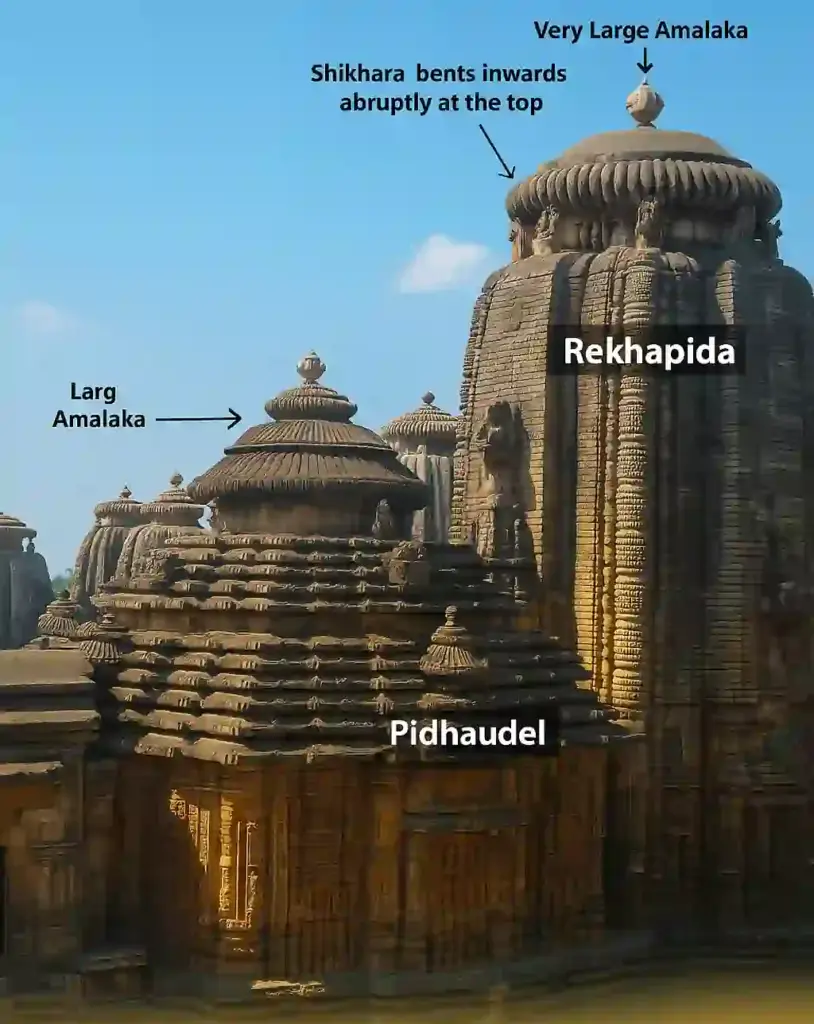
Kalinga temples are classified into three different types based on their size, shape and purpose: Each with its own structural design and religious purpose:
1) Rekha Deula (Sanctum Tower)
The Rekha Deul is the main sanctum (Garbhagrih) of the temple where the main deity is seated. It is built in the form of high, curved peaks ( spire) that rise in a royal manner, which is often compared to the height of a mountain peak. This high structure is a symbol of spiritual uplift and divine connection.
Example:
- The Lingaraj Temple sanctum in Bhubaneswar
- The Konark Sun Temple main Sanctum
2. Pidha Deula (Assembly Hall / Mandapa)
The Pidha Deula is an assembly hall where devotees gather for prayer, rituals and cultural performances. Unlike The Rekha Deula, it has a pyramidal roof formed by horizontal tiers (pid
has), which gives it a staircase. This design reflects both functionality and grandeur, making a place for collective devotion.
Example:
- The jagamohana ( Assembly Hall of the konark sun Temple)
- The jagamohana of Mukteswara Temple, Bhubaneswar
3) Khakhara Deula (Shrine of Goddesses)
The Khakhara Deul is a unique shrine type ( temple) of Kalinga architecture, which is usually dedicated to fierce goddesses like Durga maa or Chamunda mata. Its structure is specific, which has a rectangular or wagon-shaped roof that looks like a snake hood or barrel vault. This style makes it different from other temple designs and reflects its association with Shakti Puja.
Examples:
The Vaital Deula in Bhubaneswar
The Varahi Temple at Chaurasi
These types form the foundation of Kalinga temple design and are often combined in a single temple complex. For example, the Konark Sun Temple has both Rekha Deula and Peedha Deula elements.
Kalinga Architecture Temple Features
The Kalinga architecture style is known for its unique temple designs and intricate craftsmanship that reflect the artistic excellence and spiritual vision of ancient Odisha. Each temple is a masterpiece of stone architecture, reflecting both religious symbolism and aesthetic beauty.
Here are some of the key features of the Kalinga temples
1. Carved Stone Panels
The temple walls are adorned with detailed carvings depicting mythological scenes, floral motifs, deities, and scenes from everyday life. These detailed sculptures reflect the artistic talent and storytelling tradition of Kalinga artisans.
2. Khakhara Deula
The Khakhara Deula is a specific cart-shaped structure, usually found in temples dedicated to goddesses like Durga maa or Chamunda mata. Its roof is like a barrel-vaulted and it is a symbol of shakti worship.
3. Carved Gates (Toranas)
The entrances of Kalinga temples have intricate carvings of lions, elephants and Guardian deities (gatekeepers). These gates are decorative as well as the spiritual protector of the temple site.
4. Jagamohana (Assembly Hall)
The Jagmohan or assembly hall is a rectangular hall where devotees gather before entering the sanctum sanctorum (Garbhagrih). It acts as a place for worship, chanting and rituals.
5. Rekha Deula (Sanctum Tower)
The Rekha Deul is a towering spire (huge peak) built over the sanctum (Garbhagrih), which is a symbol of the mythological mountain of the gods. Its curved shikhara (winding peak) is a symbol of spiritual ascent towards divinity.
6. Decorative Motifs
Kalinga temples are decorated with symbolic motifs such as lotus, chakra, kalash(sacred pot)and scroll. Each element has a deep spiritual and philosophical meaning.
7. Orientation
Most of the Kalinga temples face east, which are designed to capture the first rays of the morning sun, which symbolises purity, knowledge and divine energy.
8. Pidha Deula (Mandapam or Assembly Hall)
The Pidha Deula is a pyramid-shaped structure in front of the sanctum sanctorum. It is used for religious gatherings, ceremonies, rituals and cultural programs. Its tiered roof (layered roof) gives it a specific look.
These architectural features not only highlight the spiritual symbolism of the Kalinga temples but also showcase the advanced stone craftsmanship of ancient Odisha.
Key Features of Kalinga Architecture
The Kalinga Architecture of Odisha is famous for its sophisticated texture, spiritual symbolism and intricate craftsmanship. Each temple follows a specific structure that represents both aesthetic beauty and devotional purpose.
Here are the major features
1. Temple Plan and Layout
The Kalinga Temple usually follows the Pancharatha (five projections) or Saptaratha (seven projections) Plan. Due to this projection, the temple appears like a star. enhancing both its structural strength and visual appeal.
2. Vertical Elevation
The characteristic of these temples is a rising spire (shikhara) over the sanctum sanctorum (Garbhagrih). This upward-tapering structure is a symbol of spiritual ascent, which represents the devotee’s journey from earth to the divine realm.
3. Decorative Carvings
The Walls and Pillars are carved with intricate carvings that depict mythological scenes, floral patterns, divine beings, animals and even erotic sculptures. These carvings narrate stories of Hindu mythology and reflect the unmatched skills of the artisans of Odisha.
4. Stone Construction
Most Kalinga temples are made of locally available stones such as sandstone, laterite or chlorite. These durable materials not only ensure the longevity of the temple but also provide fine details and smooth finishing in carving.
5. Orientation
Almost all the Kalinga temples face east, which are designed to catch the first rays of the rising sun. This eastward alignment is a symbol of purity, knowledge and divine energy, which gives the architecture a harmonious relationship with cosmic rhythm.
Historical Origins of Kalinga Architecture
The roots of Kalinga temple architecture go back to the 7th century AD during the reign of the Somavamshi and Eastern Ganga dynasties. The rulers of Kalinga were great patrons of arts and religion, and their devotion inspired the construction of magnificent temples.
The style evolved under the influence of Hinduism, which focused on building temples as cosmic structures – representing the mythical Mount Meru, located at the centre of the universe in Hindu cosmology.
Symbolism in Kalinga Architecture
The temples built in Kalinga architecture are spiritual symbols that represent the connection between human life and the divine cosmos. Every structure, curve and alignment in these temples has intensive meaning rooted in Hindu philosophy.
1. Shikhara (Tower) – Symbol of Mount Meru
The towering shikhara above the sanctum sanctorum symbolises Mount Meru, which is the axis of the universe and the Gods. It stands as a symbol of spiritual ascent, which directs the devotee’s vision from the physical world to the divine consciousness.
2. The Spiritual Journey
The journey from the temple’s base to its peak is a symbol of the internal change of the devotee movement from earthly existence to ultimate enlightenment. Each level of upliftment mirrors the path of Moksha(liberation) according to Hindu belief.
3. Solar Alignment
Many Kalinga temples, such as the Konark Sun Temple, face eastward (in the direction of the rising sun). The first rays of the sun fall directly upon the main deity, symbolising the divine illumination and cosmic energy and spiritual power.
Famous Examples of Kalinga Architecture Temples
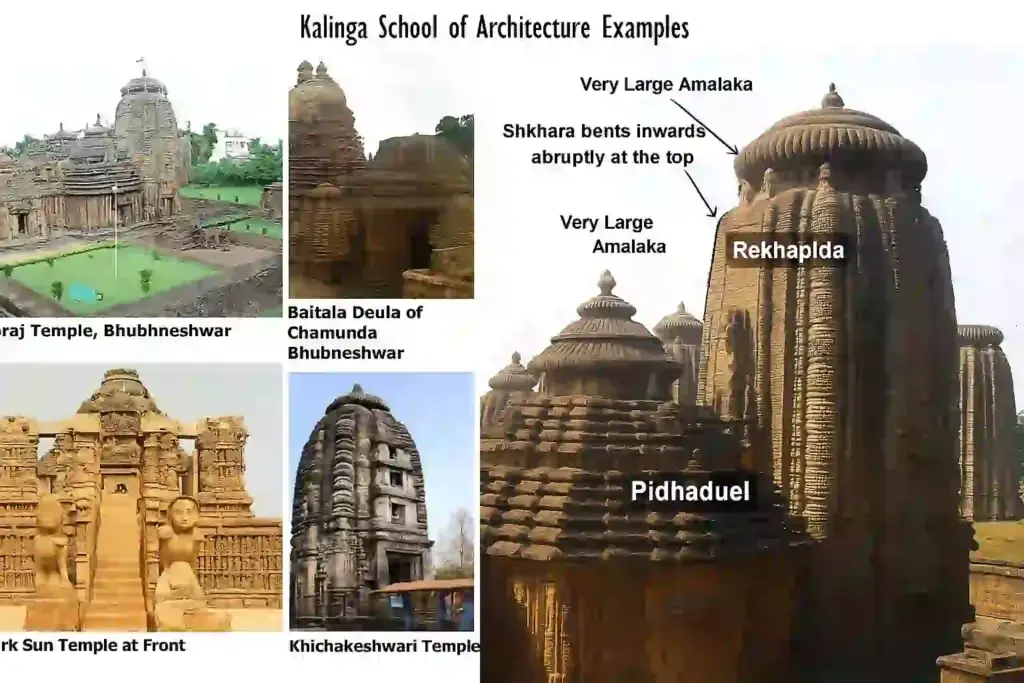
Some of the finest temples in Odisha are built in the Kalinga style. Here are some of the most renowned examples of Kalinga Architecture:
1. Konark Sun Temple
The Konark Sun Temple is a UNESCO World Heritage site. The temple is designed as a grand chariot of the sun God, the chariot is drawn by seven horses and supported on twelve intricately carved wheels. The Konark Sun Temple is a representation of the zenith of Kalinga architecture, which has a combination of divine symbolism and astronomical precision.
2. Lingaraj Temple
The Lingaraja Temple is the largest and one of the oldest temples in Odisha. Dedicated to Lord Shiva. Located in Bhubaneswar, this temple showcases all three types of Kalinga Dual style– Rekha Deula type, Pidha Deula and Khakhara Deula – in the same grand complex.
3. Mukteshwar Temple
The Mukteshwar Temple in Bhubaneswar is also called the “Gem of Odisha Architecture”. It is famous for its exquisitely carved toranas (arches) and beautiful sculptures, which represent a transitional phase in the development of Kalinga architecture.
4. Rajarani Temple
The Rajarani Temple is known for its red and golden sandstone structure and stunning sculptures depicting celestial beings, dancers and couples. Unlike other temples, it is unique in that it is not dedicated to any specific deity, reflecting the artistic freedom of the Kalinga builders.
Kalinga Architecture in Konark Sun Temple
The Konark Sun Temple is often regarded as the crown jewel of Kalinga architecture. Built by King Narasimhadeva I of the Eastern Ganga dynasty in the 13th century, this temple is a wonderful blend of art, spirituality and science. The Temple is designed in the form of a giant stone chariot; it features 24 intricately carved wheels and is pulled by seven horses, symbolising the seven days of the week and the passage of time.
1. Wheels – Symbolism and Functionality
Each of the 24 carved wheels of the Konark Sun Temple is not only a symbolic representation of time, but also a functional sundial. The spokes of these wheels can accurately measure time through the position of the Sun’s shadow, showing the scientific genius of ancient Indian architects.
2. Carvings – A Story in Stone
The walls of the Konark temple are covered with intricate carvings that depict mythology stories, divine beings, animals and scenes of everyday life. These detailed sculptures reflect the artistic excellence and cultural richness of the Kalinga style.
3. Scientific Precision and Solar Alignment
The Architectural alignment of the temple demonstrates amazing scientific accuracy. It was constructed in such a way that the first rays of the rising sun in the morning directly illuminate the main deity inside the sanctum sanctorum (Garbhgrih). This solar alignment reflects the fusion of spirituality and astronomy in Kalinga architecture.
Influence of Kalinga Architecture on Indian Temple Styles
Kalinga architecture is specific to the Odisha region; its influence spread far and wide. inspiring temple building traditions in eastern and southern India. The architectural splendour, symbolic designs and intricate carvings of the Kalinga temples have left a lasting mark on Indian temple architecture as a whole.
1. Influence on Andhra Pradesh and Bengal
The Andhra Pradesh and West Bengal temples are influenced by the Kalinga style, especially during the medieval period when cultural and trade connections were strong. The temples in these regions adopted features such as curved shikhara (spires), decorative carvings and east-facing sanctums inspired by the temple design of Odisha.
2. Similarities with the Nagara Style
The Kalinga style shares many features with the Nagara style of North Indian temples, such as the curvilinear shikhara, the square sanctum plan and the ornamental gateways. However, Kalinga architecture developed its own distinct identity with elements such as Rekha Deul, Pidha Deul and Khakhara Deul, which together define its unique temple form.
3. Cultural and Artistic Legacy
The artistic motifs, stone sculpting techniques, and spiritual symbolism of Kalinga architecture influenced temple art and design across India and Southeast Asia. Its fusion of engineering precision and devotional purpose continues to inspire modern architects and historians studying Indian temple evolution.
Preservation and UNESCO Recognition
The world-famous Kalinga temples, such as the Konark Sun Temple and many other magnificent Kalinga temples, have been recognised UNESCO World Heritage site for their outstanding culture and architectural significance. These monuments are an artistic excellence and spiritual depth. Despite their global recognition, these temples face several Preservation challenges.
1. Weathering Due to Sea Winds
Temples located near the coast, especially the Konark Sun Temple, suffer from erosion and weathering caused by salty sea winds and humidity, which gradually weaken the stone carvings and structure.
2. Neglect and Lack of Maintenance
Some of the less famous Kalinga temples have suffered from neglect and inadequate maintenance, resulting in loss of intricate carvings, sculptures and architectural details over time.
3. Human Interference and Overcrowding
Overcrowding of tourists, vandalism and uncontrolled human activities contribute to the degradation of temple structures, threatening their long-term preservation.
4. Conservation Efforts
The Archaeological Survey of India (ASI), in collaboration with UNESCO and other cultural organisations, is carrying out restoration and conservation projects to safeguard these architectural heritages for future generations. These efforts include structural stabilisation, controlled access, and awareness programs promoting responsible tourism.
Conclusion
The Kalinga architecture of Odisha is one of the greatest achievements of Indian temple design, blending art, devotion and science to create timeless masterpieces. Each temple—from the magnificent Konark Sun Temple to the sacred Lingaraja and Mukteshwar temples—represents the spiritual vision and architectural mastery of ancient craftsmen.
Its distinctive elements, such as the Rekha Deula, Peedha Deula and Khakhara Deula, with intricate carvings and sun alignment, display a perfect harmony between engineering precision and divine symbolism. Beyond their religious purpose, these temples reflect the cultural identity, artistic excellence and philosophical depth of Odisha’s glorious past.
FAQ on Kalinga Architecture
Q1:What is Kalinga architecture?
Kalinga architecture is a distinctive temple architectural style developed in Odisha, known for its tall curvilinear tower (shikharas), intricate stone carvings and precise solar alignment. These temples beautifully combine artistic detail, spiritual symbolism and scientific accuracy.
Q2. Which is the most famous example of Kalinga Architecture?
The Konark Sun Temple is the most iconic and grand example of Kalinga architecture. Built in the form of a stone chariot of the Sun God, it has 24 carved wheels and seven horses, representing the movement of time and solar energy.
Q3:How many types of Kalinga temples are there?
There are three main types of Kalinga temples based on their design and purpose:
- Rekha Deula – The sanctum tower or main shrine.
- Pidha Deula – The assembly or prayer hall.
Khakhara Deula – The shrine dedicated to goddesses, with a unique cart-shaped roof.
Q4: Why are Kalinga temples east-facing?
Most Kalinga temples face east to capture the first rays of the rising sun, symbolising purity, knowledge and divine energy. This alignment reflects the deep astronomical knowledge and spiritual vision of the ancient temple builders.